Is It Bad to Sleep With Headphones or Earbuds In?
By LatestSounds Team ·
This article contains affiliate links. If you buy through them we may earn a commission, at no extra cost to you.
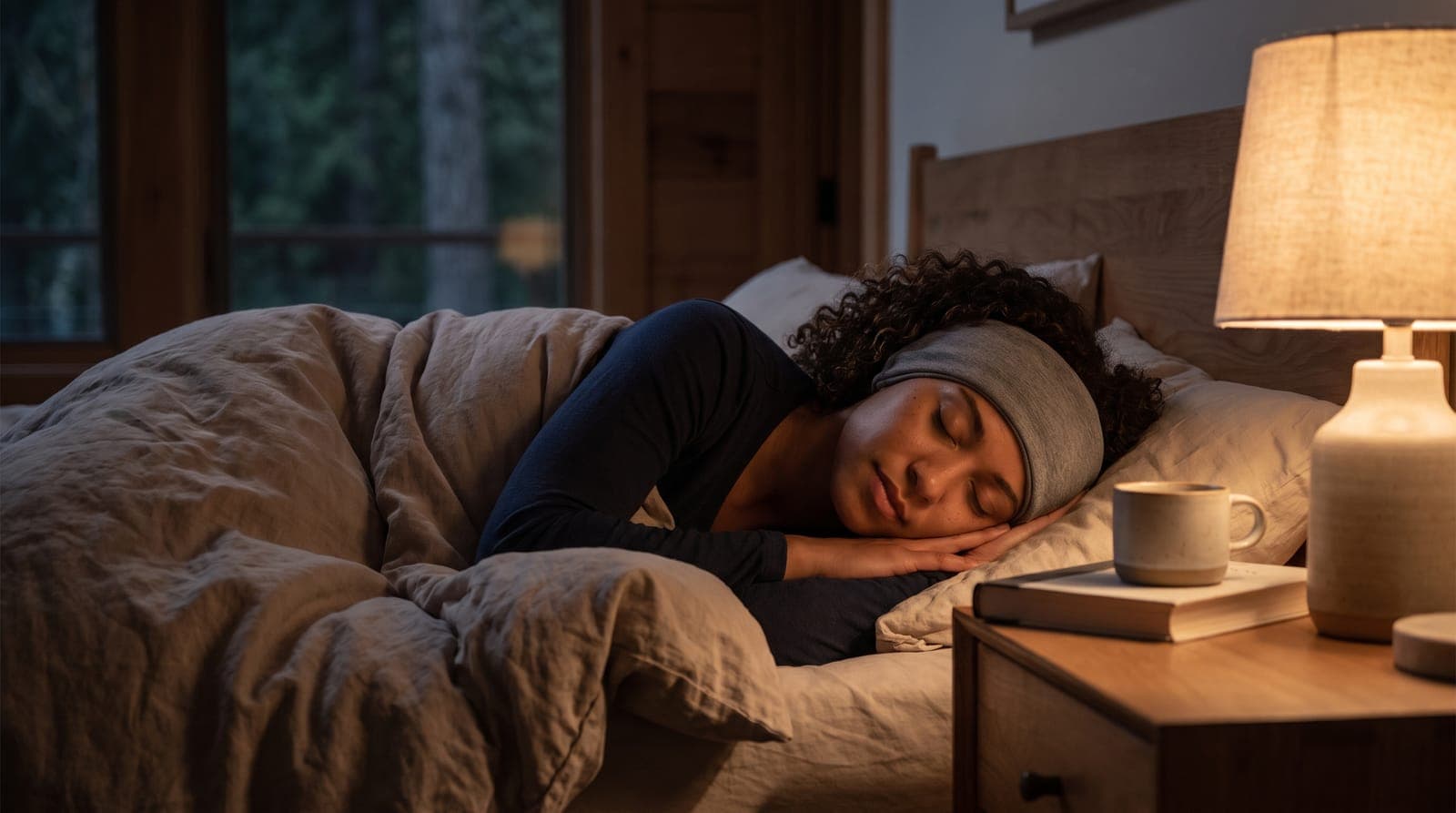
Plenty of people fall asleep to a podcast, rain sounds or white noise to block out a snoring partner or a noisy street. Doing it now and then is unlikely to cause harm. Doing it every night with ordinary earbuds carries some real, mostly avoidable risks. This guide sets out what health sources actually say, what's overblown, and how to make the habit safer.
Quick answer
Quick answer: For most people, sleeping with headphones isn't dangerous if the volume is low and the audio stops soon after you fall asleep. The main risks of in-ear earbuds worn all night are earwax build-up, outer-ear infections from trapped moisture, soreness from pressure when you lie on your side, and hearing damage if the volume is too high. There's no good evidence that Bluetooth radiation from earbuds is harmful. The safest options are a speaker by the bed, a soft headband with flat speakers, or earbuds designed for sleep, used at low volume with a sleep timer.
The risks, and how big they are
Earwax build-up and impaction
Your ears clean themselves: wax slowly moves out of the ear canal. Anything that sits in the canal for hours can push wax back in and stop it from coming out. Mayo Clinic lists spending time with earbuds, earplugs or hearing aids in your ears as something that can lead to earwax build-up or blockage. Cleveland Clinic audiologist Valerie Pavlovich Ruff, AuD, notes that wax pushed deeper can cause a blocked feeling, temporary hearing loss or ringing, and may need to be removed by a healthcare provider.
How big a deal: a common, fixable problem, more likely if you already produce a lot of wax. Don't try to dig it out with cotton swabs. Mayo Clinic advises against putting anything in the ear canal.
Outer-ear infections (otitis externa)
A warm, humid, sealed ear canal is a good environment for bacteria. A patient leaflet from Chelsea and Westminster Hospital NHS Foundation Trust lists "wearing ear plugs, hearing aids or head phones preventing ventilation in the ears" as a common cause of otitis externa. Cleveland Clinic makes the same point about sleeping in earbuds, particularly straight after a shower when the ear canal is still damp.
How big a deal: the risk goes up if you wear the same unwashed tips every night, wear earbuds with damp ears, or already have eczema or irritated skin in the ear canal.
Pressure, soreness and skin irritation
If you sleep on your side, your head pushes a hard earbud into the ear canal and against the cartilage of the outer ear all night. That can cause soreness, and poorly fitting earbuds can rub the skin. Bulky over-ear headphones are uncomfortable to sleep in and put pressure on the outer ear.
How big a deal: mainly a comfort issue, but tenderness that lasts, or pain in the cartilage of the outer ear, is a sign to stop and let the ear recover. Low-profile sleep buds and soft headbands are designed to reduce this.
Hearing damage from volume
This is the risk with the most evidence behind it, and it depends on dose: how loud, for how long.
- WHO safe-listening guidance puts 80 dB as safe for up to 40 hours a week for adults. The safe time drops sharply as the level rises: about four hours a week at 90 dB and 20 minutes a week at 100 dB. WHO suggests keeping personal devices at no more than 60% of maximum volume.
- The NIDCD (part of the US National Institutes of Health) says that sounds at or below 70 dBA are unlikely to cause hearing loss even after long exposure, while long or repeated exposure at or above 85 dBA can cause it.
Eight hours of audio through the night can add up to a lot of exposure if the volume is set loud enough to drown out traffic or snoring. At a whisper-quiet level with a timer, the dose is small. A practical test from Cleveland Clinic: keep the volume at about half or lower, quiet enough that you could still hear someone next to you speak.
Missing alarms and emergencies
Noise cancellation and loud masking sounds can stop you hearing a smoke alarm, a baby monitor, a phone call or someone calling for help. Cleveland Clinic advises against using noise cancellation while you sleep for this reason. If you're responsible for children, or you live alone and rely on a smoke alarm, leave noise cancellation off and keep the volume low.
Strangulation and entanglement with cords
Wired headphones can wrap around your neck while you turn over. For adults the main realistic risks are waking up tangled, a cable pulled out of a phone, or a damaged cable. Cords are a genuine strangulation hazard for babies and young children, so keep headphone and charging cables out of their cots and beds. For adults, wireless headphones or a headband remove the issue.
Bluetooth radiation: claims versus evidence
Bluetooth earbuds give off low-power radiofrequency (RF) energy, a type of non-ionising radiation. The US National Cancer Institute's fact sheet on cell phones says the evidence to date suggests phone use does not cause brain or other cancers, and that this radiation is too low in energy to damage DNA. The same fact sheet notes that Bluetooth devices typically transmit at 10 to 400 times lower power than cell phones. No major health body has found that Bluetooth headphones cause cancer or other harm. If you'd still rather avoid it, a speaker on the bedside table or wired headphones give you the same result with no radio in your ear.
The benefits: why people sleep with headphones
The habit is popular for good reasons.
- Noise masking. Steady sound such as white, pink or brown noise, rain or a fan can cover irregular noises like traffic, neighbours or a partner's snoring that might otherwise wake you.
- A wind-down routine. A familiar podcast, audiobook or playlist can stop your mind racing when you can't sleep.
- Music for sleep. A 2022 Cochrane review of 13 studies found that listening to music may improve self-reported sleep quality in adults with insomnia symptoms. The evidence for objectively measured sleep was weaker, and none of the studies reported harms.
- Not disturbing a partner. Headphones let one person listen without keeping the other awake.
Safer habits if you sleep with headphones
- Keep the volume low. At about half volume or lower, you should still be able to hear someone speaking next to you. Use your phone's headphone safety features: on iPhone, Settings > Sounds & Haptics > Headphone Safety can reduce loud audio automatically. Many Android phones warn you when headphone volume is high.
- Set a sleep timer. On iPhone, open the Clock app, tap Timers, then When Timer Ends > Stop Playing. Spotify, Audible, podcast apps and many white-noise apps have their own sleep timers. With iOS 26, AirPods Pro 2, AirPods Pro 3 and AirPods 4 can also pause automatically when they detect you've fallen asleep: turn on Pause Media When Falling Asleep in your AirPods settings.
- Turn noise cancellation off so you can still hear alarms, or use a transparency or aware mode instead.
- Keep your ears and tips clean and dry. Don't put earbuds into damp ears. Wash silicone tips regularly, replace foam tips when they get grubby, and wipe the earbuds down. Our guide to cleaning and maintaining headphones covers this step by step.
- Give your ears nights off. Swap between earbuds, a headband and a bedside speaker so your ear canals get some air.
- Use the smallest tips that seal comfortably. Tips that are too big increase pressure. Ones that are too small need more volume to block noise.
- Use wireless. No cable around your neck, and no plug for your weight to lever against.
What to look for in sleep headphones
Ordinary earbuds stick out from the ear, which is what makes side-sleeping painful. Sleep-specific designs solve different problems.
| Type | Good for | Trade-offs |
|---|---|---|
| Headband headphones (thin speakers in a soft fabric band) | Side sleepers, anyone who dislikes things in their ears | Less noise blocking, band can slip, washable fabric needed |
| Sleep earbuds (small, flush-fitting, soft tips) | Blocking snoring and street noise, side sleepers | Still sit in the ear canal, shorter battery life, higher price |
| Regular earbuds at low volume | Occasional use, back sleepers | Pressure when lying on your side, can fall out |
| Over-ear headphones | Back sleepers on flights or trains | Too bulky for side sleeping, heat |
| Bedside speaker or sound machine | Everyone, and the safest option overall | Can disturb a partner, doesn't block much noise |
Features worth paying for:
- Low profile. The earbud should sit flush with, or inside, the outer ear so it doesn't press when you lie on your side.
- Soft silicone or foam tips in several sizes.
- A sleep timer or sleep detection built into the app, so audio stops automatically.
- Noise masking (built-in white noise or sleep sounds) instead of loud music. Many sleep earbuds play these from local storage, so your phone doesn't have to keep streaming all night.
- Enough battery for a full night, or a design that stops playback and switches off once you're asleep.
- Washable materials for headbands.
If you wear glasses to read in bed, our headphones for glasses wearers guide explains which earcup designs press least on the arms of your glasses. For daytime noise cancelling, a comfortable over-ear pair such as the Bose QuietComfort SC is better suited to flights and commutes than to bed. Our round-up of the best noise-cancelling earbuds covers compact options for travel naps.
Shop sleep headphones on Amazon
When to see a doctor
See a GP, an audiologist or an ENT (ear, nose and throat) specialist if you notice any of these:
- Ear pain, itching, swelling, discharge or a bad smell from the ear. These can be signs of an outer-ear infection, which may need prescription drops.
- A blocked or full feeling, muffled hearing or new ringing (tinnitus) that doesn't clear within a day or two. This could be impacted earwax, which a professional can remove safely.
- Ringing in the ears that lasts, trouble hearing high-pitched sounds, or struggling to follow conversations in noisy places or on the phone. WHO lists these as warning signs of hearing damage and recommends a hearing check.
- Sudden hearing loss in one or both ears, with or without dizziness or ringing. Get medical help urgently. The NIDCD notes that people often discover sudden sensorineural hearing loss when they wake up, and mistake it for earwax or congestion. Prompt treatment matters, so don't wait to see if it passes.
Stop using in-ear headphones at night until any ear symptoms have cleared.
Frequently asked questions
Is it bad to sleep with AirPods in?
Occasionally, at low volume, it's unlikely to cause harm. The same risks apply as with any earbuds: wax build-up, moisture and infection, pressure when side-sleeping, and a small chance of losing or crushing an AirPod in the bed. If you use AirPods Pro 2, AirPods Pro 3 or AirPods 4 at night, turn on Pause Media When Falling Asleep and keep noise cancellation off. Our AirPods Pro 3 review covers the fit and comfort in more detail.
Can sleeping with earbuds cause an ear infection?
It can increase the risk. Earbuds trap warmth and moisture in the ear canal and can carry bacteria if they aren't cleaned. Keep them clean, never put them in damp ears, and give your ears regular nights off.
Can sleeping with headphones damage your hearing?
Only if the volume is high enough for long enough. WHO considers 80 dB safe for up to 40 hours a week, and the NIDCD says sound at or below 70 dBA is unlikely to cause hearing loss. Low-volume sleep sounds with a timer are well within those limits. Loud music playing all night may not be.
Is it safe to sleep with noise-cancelling headphones?
Noise cancellation itself doesn't harm your ears, but it can stop you hearing smoke alarms, children or your phone. Health sources recommend keeping it off while you sleep. If you need to block noise, use low-volume masking sounds instead.
Are Bluetooth earbuds safe to wear all night?
The radiofrequency energy from Bluetooth earbuds is low-power and non-ionising, and there's no good evidence that it causes cancer or other harm. The practical concerns are ear hygiene, pressure and volume.
What is the best thing to wear to sleep with sound?
For most side sleepers, a soft headband with flat speakers is the most comfortable. Sleep-specific earbuds block more noise. A bedside speaker or sound machine avoids ear risks entirely, if your partner doesn't mind.
Disclaimer
This article is general information, not medical advice. If you have ear pain, hearing changes, tinnitus or a history of ear problems, speak to a doctor or audiologist before wearing earbuds overnight.
Sources
- World Health Organization: Deafness and hearing loss: Safe listening (Q&A)
- World Health Organization: Deafness and hearing loss fact sheet
- WHO-ITU: Safe listening devices and systems standard
- NIDCD: Noise-Induced Hearing Loss
- NIDCD: Sudden Sensorineural Hearing Loss
- Mayo Clinic: Earwax blockage, symptoms and causes
- Cleveland Clinic: Is it safe to sleep with earbuds in?
- Chelsea and Westminster Hospital NHS Foundation Trust: Otitis externa
- Guy's and St Thomas' NHS Foundation Trust: Otitis externa
- National Cancer Institute: Cell Phones and Cancer Risk fact sheet
- Cochrane: Listening to music for insomnia in adults (2022)
- Apple Support: Set timers in Clock on iPhone